Every week, thousands of referrals disappear before a patient ever reaches a specialist. A primary care physician sends a referral, the receiving clinic never sees the fax, an insurance authorization sits in a work queue, or the patient simply never books an appointment. Industry studies routinely show that health systems can lose more than half of outbound referrals through these breakdowns, leading to delayed care, lost revenue, and frustrated providers.
A modern patient referral management system tackles these operational failures by replacing paper-based workflows with connected digital referral networks. Instead of relying on spreadsheets and phone calls, referrals can be captured automatically, insurance information validated, documents attached electronically, and appointment status synchronized back to the referring clinician.
The biggest improvement isn’t simply digitizing referrals. It’s achieving electronic referral loop closure, where every referral can be tracked from creation through scheduling and completed care. Combined with intelligent routing, automated patient outreach, and measurable leakage reduction, organizations finally gain visibility into every referral instead of wondering where patients disappeared.
Key Takeaways
- Choose interoperability first. Platforms with native EHR integration using HL7 and FHIR eliminate duplicate documentation and keep referral statuses synchronized across clinical systems.
- Automated fax processing still matters. Even in 2026, many referrals originate as faxes. AI-powered automated fax intake dramatically reduces manual indexing and accelerates specialist routing.
- Track outcomes instead of referrals. The best platforms improve scheduled-to-seen conversion rate by combining real-time referral tracking, patient reminders, self-scheduling, and automated follow-up.
Immediate Verdict: Patient Referral Management System Decision Matrix
Many organizations begin product evaluations by comparing feature lists. That’s usually the wrong approach. The better question is where your referral process fails today.
| If your biggest challenge is… | Recommended Platform | Why it stands out |
| Enterprise-wide referral routing with AI fax processing | ReferralMD | AI OCR, dynamic provider matching, referral analytics, closed-loop tracking |
| Keeping referrals inside your provider network while coordinating with payers | Veradigm | Large provider network, payer connectivity, referral visibility, insurance workflows |
| Converting referrals into scheduled specialty appointments | Promptly | Automated SMS outreach, digital intake, self-scheduling, patient engagement |
| Managing referrals across multiple communication channels while working alongside existing EHRs | Luma Health | Multi-channel communication, smart scheduling, bi-directional EHR synchronization |
| Enterprise patient access, registration, and eligibility verification | Phreesia | Digital registration, insurance verification, intake automation at scale |
| Hospital discharge planning and post-acute placement | Aidin | Real-time provider availability, discharge coordination, post-acute referral management |
Every platform reviewed here approaches the referral problem differently. Some specialize in AI-powered document ingestion. Others focus on patient engagement or post-discharge coordination. The right choice depends less on organization size and more on where referrals currently break down.
Also read our blog on Visitor Management Platform for Hospitals
Patient Referral Management Systems Categorized by Clinical Use-Case
Healthcare organizations don’t all experience referral bottlenecks in the same place. Large integrated delivery networks often struggle with unread fax queues and provider routing. Specialty practices care more about converting referrals into appointments. Hospitals focus on safe discharge placement and coordinating care after patients leave inpatient settings.
Instead of ranking products from one to six, we’ve grouped them by the operational problem they solve best.
Category A: Enterprise Referral Automation & Fax Ingestion Engines
ReferralMD (Best for End-to-End AI Intake & Specialist Routing)
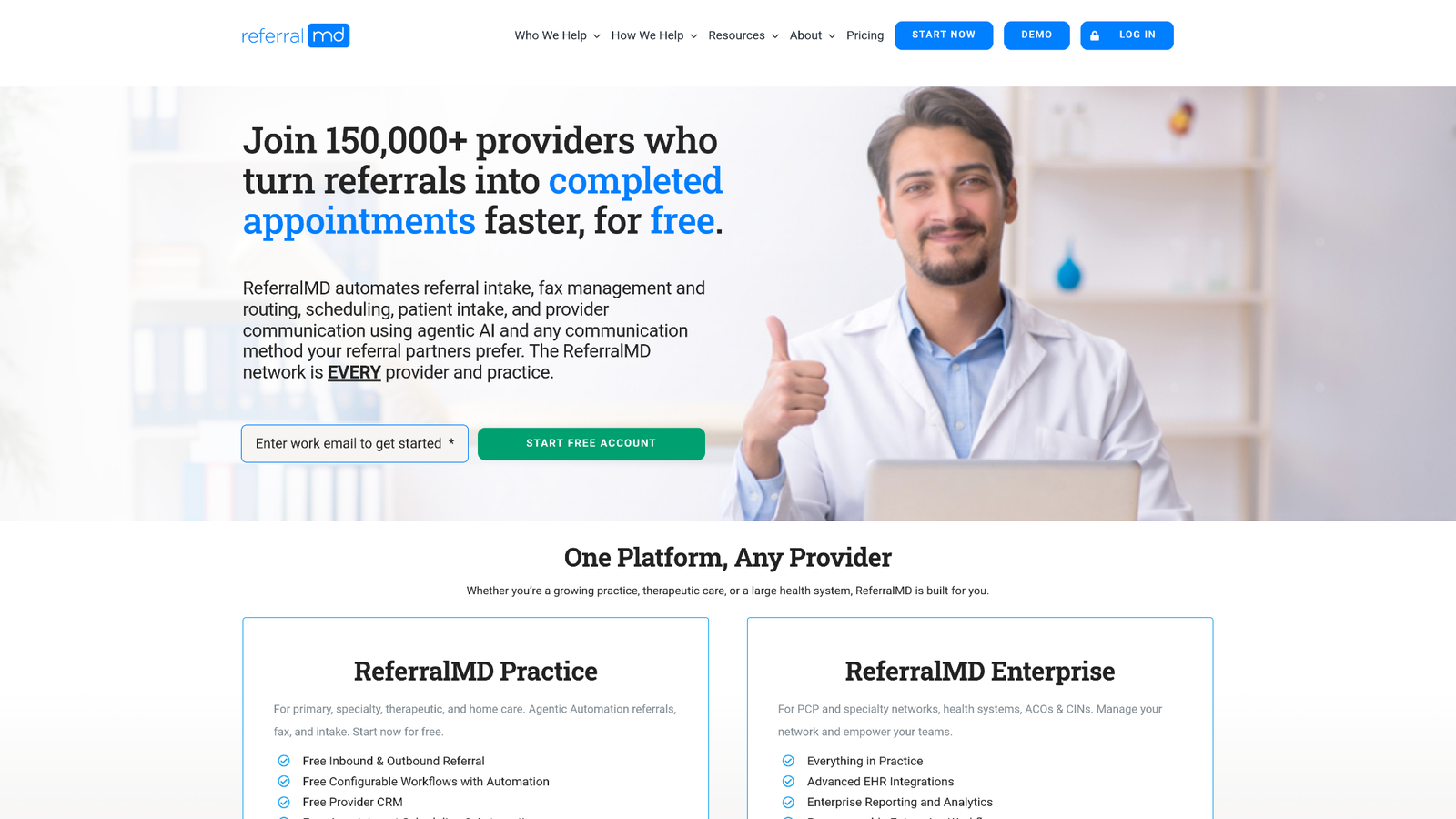
ReferralMD is designed for organizations processing thousands of referrals every month across multiple specialties. Rather than treating referrals as isolated documents, it creates a structured workflow that follows each patient from intake through completed specialist care.
Its strongest capability is intelligent referral ingestion. Incoming paper referrals, scanned documents, and electronic orders are processed using AI-powered OCR that extracts patient demographics, diagnoses, provider information, and attached clinical documentation. Instead of assigning staff to manually re-enter information, referrals become searchable digital records almost immediately.
Routing is equally mature. Rather than assigning referrals to static provider lists, ReferralMD evaluates specialist availability, geographic preferences, accepted insurance plans, and referral rules before directing patients to the most appropriate destination. This significantly reduces delays caused by overloaded specialists or incomplete referrals.
Referral coordinators also gain visibility through analytics dashboards showing referral aging, bottlenecks, provider response times, and completion percentages. Because the platform supports HIPAA-compliant referral tracking, organizations can identify referrals approaching service-level thresholds before they become lost opportunities.
For health systems focused on electronic referral loop closure, ReferralMD provides one of the more comprehensive operational toolsets available today.
Also read: HIPAA Compliance for Saas
Veradigm (Best for Network Expansion & Payer-Provider Interoperability)
Referral leakage isn’t always caused by operational inefficiency. Sometimes referrals leave the network simply because providers don’t know which specialists accept specific insurance plans or participate in preferred payer arrangements.
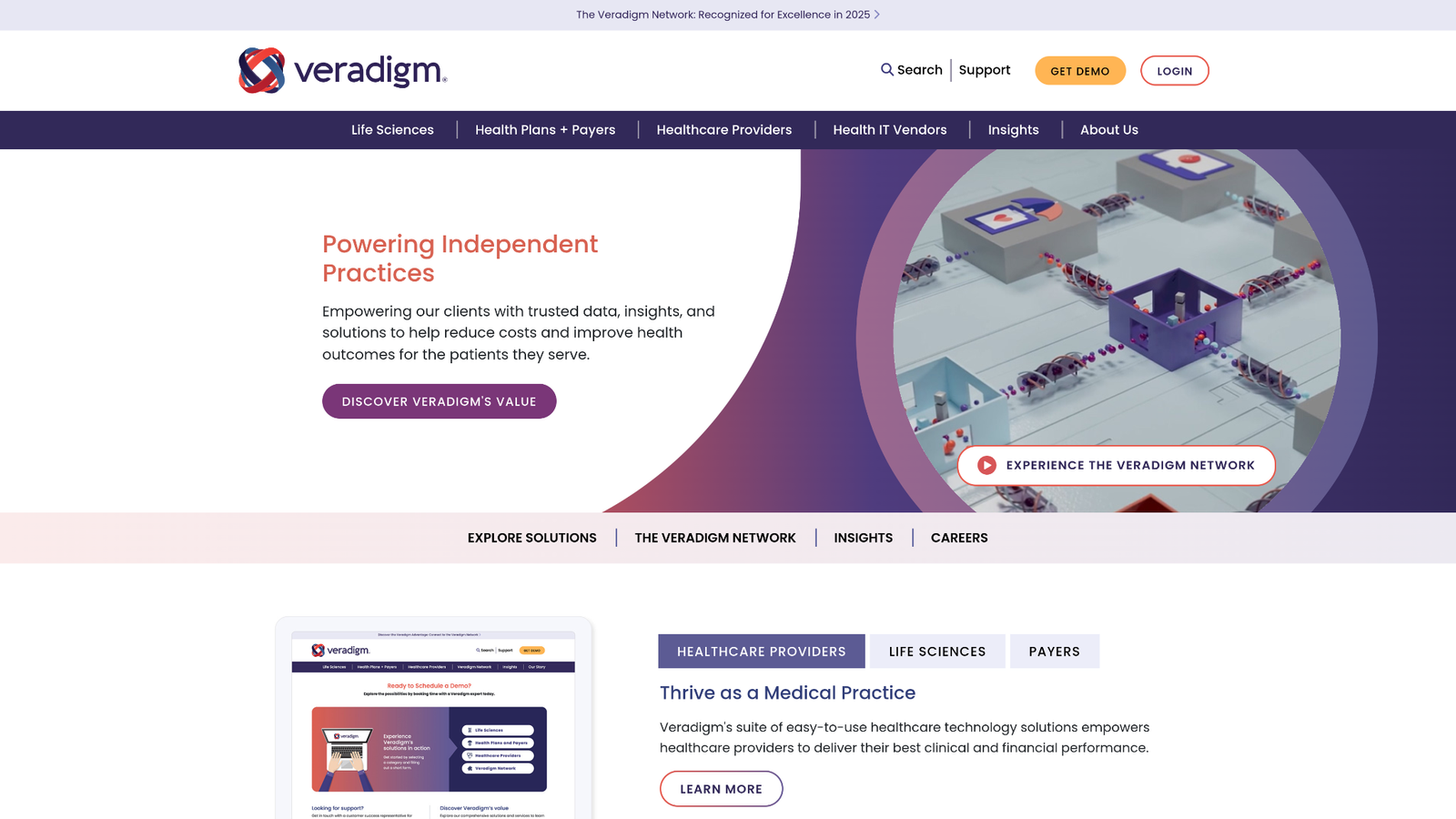
Veradigm addresses this problem through its extensive payer-provider connectivity and established healthcare network.
When a clinician creates a referral, the platform helps identify specialists based on specialty, location, insurance participation, and network affiliation. This reduces unnecessary out-of-network referrals while supporting stronger relationships across affiliated providers.
Another differentiator is its handling of insurance prior authorization sync. Instead of separating referral management from payer workflows, Veradigm helps coordinate authorization requirements alongside referral documentation, reducing delays that frequently prevent patients from scheduling specialist visits.
Organizations already invested in broader Veradigm clinical solutions also benefit from tighter integration between billing operations, population health initiatives, and referral management. Those shared workflows allow administrators to monitor referral completion alongside financial performance and care coordination metrics rather than managing disconnected operational dashboards.
For organizations prioritizing specialist network routing and reducing avoidable out-of-network utilization, Veradigm offers a mature enterprise ecosystem rather than a standalone referral application.
Category B: Patient Engagement & Self-Scheduling Referral Drivers
Promptly (Best for Specialty Practice Automated Intake & Booking)
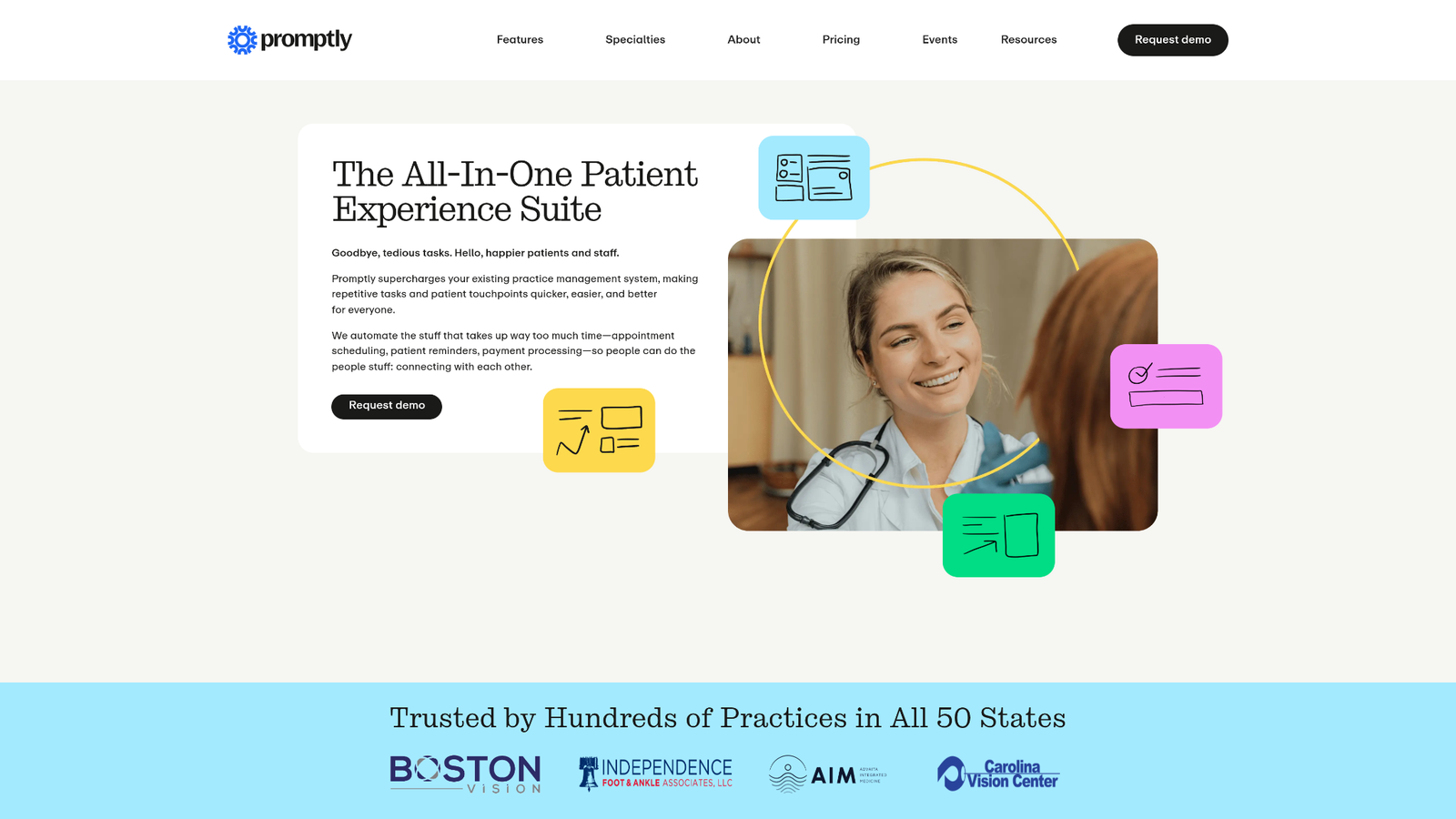
Receiving referrals quickly doesn’t automatically fill physician schedules. Many specialty practices discover that patients never answer phone calls, forget to return messages, or delay scheduling until the referral expires.
Promptly focuses on solving this conversion problem.
As soon as a referral enters the platform, automated workflows begin contacting patients through SMS rather than relying exclusively on call-center staff. Patients can review appointment availability, complete digital intake forms, upload insurance information, and reserve consultation times without waiting for office personnel.
This immediate engagement has a measurable effect on the scheduled-to-seen conversion rate, particularly for surgical practices, orthopedics, cardiology, gastroenterology, and other specialties where referral volumes fluctuate throughout the week.
Promptly also reduces administrative overhead before the first appointment. Digital registration, payment collection, electronic forms, and reminder sequences are completed before patients arrive, giving front-desk teams fewer manual tasks during busy clinic hours.
Instead of optimizing referral administration, Promptly optimizes referral conversion. For specialty organizations where appointment capacity matters more than referral volume alone, that distinction can produce meaningful improvements in provider utilization and patient access.
Luma Health (Best for Unified Patient Access & EHR Integration)
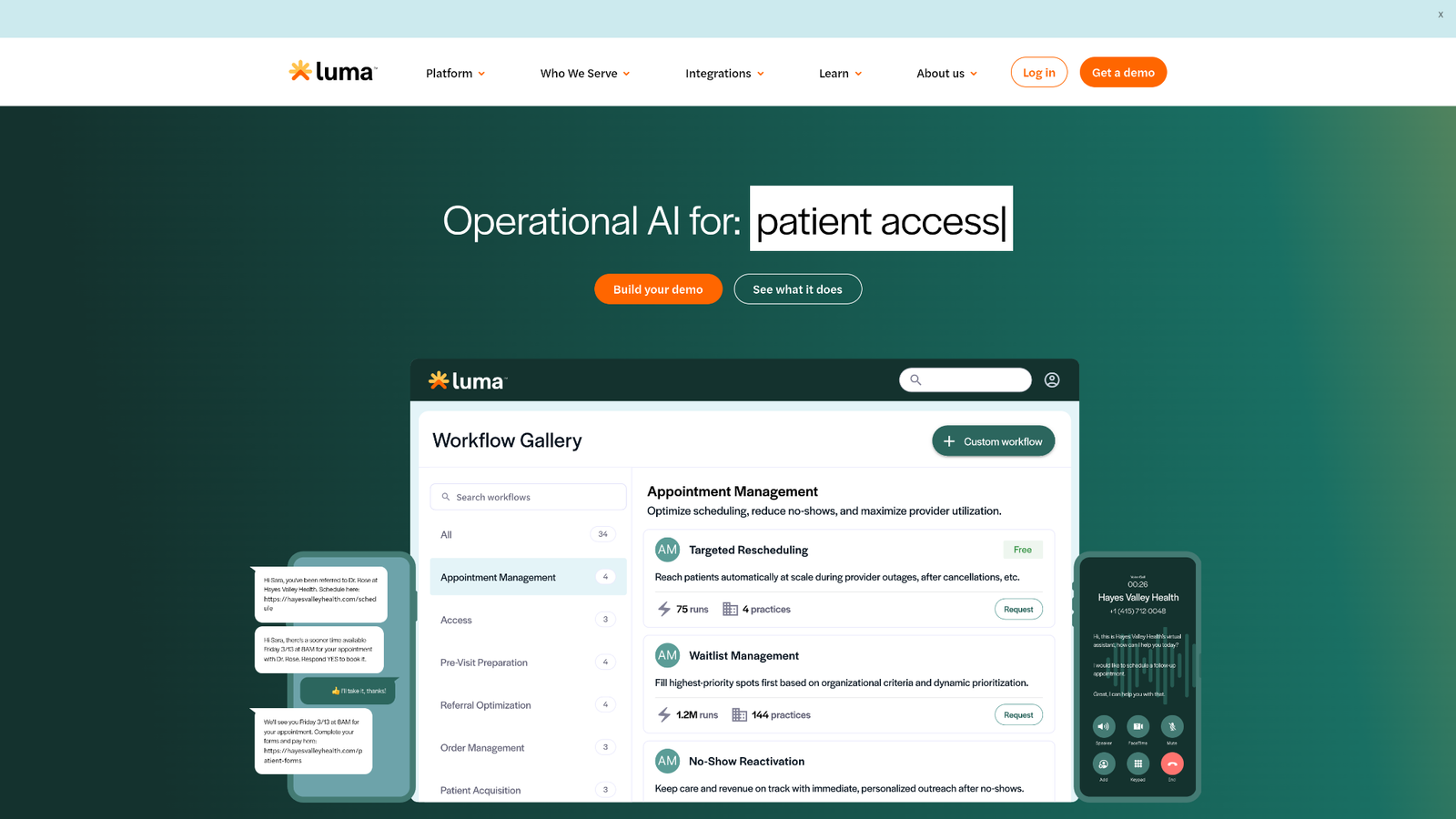
Luma Health approaches referrals from a patient access perspective rather than treating them as isolated administrative tasks. Instead of creating another work queue for referral coordinators, the platform monitors referral activity inside the existing EHR and launches patient outreach automatically.
Its Patient Access Engine continuously evaluates referral status and initiates communication through SMS, voice, email, or patient portals based on organizational preferences. This flexibility matters because patient populations don’t all respond to the same communication channel. Matching outreach to patient behavior often produces better scheduling outcomes than relying on email campaigns alone.
The platform also includes smart waitlists that automatically fill cancelled appointment slots with patients already waiting for care. For high-demand specialties where appointments are booked months in advance, this helps recover lost clinical capacity while shortening access times.
From a technical perspective, Luma Health emphasizes bi-directional EHR integration. Appointment updates, cancellations, and completed visits synchronize back into supported clinical systems, reducing duplicate documentation and supporting accurate care coordination. Organizations that already have mature EHR workflows can add referral automation without replacing existing scheduling infrastructure.
Luma Health is best suited for organizations that view referrals as part of a broader patient access strategy rather than simply a document-routing process.
Here’s a guide on how to sync Zoom to Outlook
Category C: High-Volume Health System Intake & Post-Acute Placement
Phreesia (Best for Enterprise Access, Eligibility & Patient Registration)
Phreesia is widely recognized for digital patient intake, but its capabilities extend well beyond pre-visit paperwork. Large health systems also use the platform to streamline referral registration before patients ever interact with scheduling staff.
As referrals arrive, Phreesia can collect demographic information, validate insurance eligibility, gather electronic signatures, and prepare patients for scheduling through digital workflows. Eliminating repetitive registration tasks allows referral coordinators to spend more time resolving complex cases instead of entering routine information.
One of its strongest operational advantages is real-time eligibility verification. Coverage can be checked before appointments are confirmed, reducing last-minute cancellations caused by insurance issues or inaccurate payer information. When combined with referral workflows, this shortens the time between referral creation and completed appointment.
For enterprise organizations managing hundreds of clinics, standardized intake also improves reporting consistency. Registration quality, insurance verification rates, and patient completion metrics become easier to monitor across locations without relying on different local processes.
While Phreesia is not exclusively a referral platform, organizations looking to modernize patient access, digital registration, and front-end revenue cycle operations often find it complements broader referral management initiatives exceptionally well.
Aidin (Best for Hospital Discharge & Post-Acute Referral Management)
Hospital referrals don’t always end with specialist appointments. Many involve finding appropriate post-acute care after discharge, where delays can extend hospital stays and reduce bed availability.
Aidin was built specifically for these transition-of-care scenarios.
Instead of relying on phone calls and spreadsheets, discharge planners can search participating skilled nursing facilities, rehabilitation centers, home health agencies, and hospice providers from a centralized platform. Availability, accepted insurance plans, quality measures, and response times are visible before referrals are sent, helping care teams make faster placement decisions.
Communication continues after referrals are submitted. Receiving facilities can accept or decline referrals electronically, while discharge teams monitor progress from a shared dashboard rather than chasing updates through multiple communication channels.
For hospitals focused on reducing unnecessary inpatient days, this visibility is particularly valuable. Faster placement decisions support earlier discharges, improved bed utilization, and smoother coordination across acute and post-acute providers.
Aidin addresses a very different referral challenge than outpatient referral platforms. Rather than increasing specialist appointments, it helps hospitals move patients safely into the next stage of care while maintaining transparency throughout the transition.
Patient Referral Management System Technical Implementation Red Flags
Selecting software is only half the project. Many implementations fail because organizations underestimate the technical dependencies behind referral workflows. Even products with strong feature sets can create new bottlenecks if integrations, routing rules, or communication strategies aren’t configured correctly.
The first warning sign is unidirectional EHR integration.
Some systems can send referrals from the EHR but never receive appointment updates in return. Referral coordinators then have to log into separate applications to determine whether patients were contacted, scheduled, or seen. This breaks electronic referral loop closure, forcing staff to manually reconcile referral statuses and increasing the risk of patients falling through the cracks.
Verify that referral creation, appointment scheduling, cancellations, completed visits, and clinical documentation all synchronize through supported HL7 or FHIR interfaces instead of flowing in only one direction.
Another common problem involves automated fax intake.
OCR technology performs well with structured referral forms but often struggles with handwritten provider notes, low-resolution scans, secondary insurance cards, or multi-page diagnostic attachments. When OCR confidence drops, referrals are pushed into manual review queues where staff must correct extracted data before routing can continue.
Organizations should benchmark OCR accuracy using their own referral documents rather than relying solely on vendor demonstrations.
Patient engagement strategies can also undermine implementation success.
Many health systems automate every referral notification through email despite serving populations that primarily respond to SMS or live phone calls. The result is declining response rates and lower scheduled-to-seen conversion rates despite successful technical deployment.
Effective outreach strategies combine communication preferences, appointment urgency, language selection, and follow-up timing instead of applying identical workflows to every patient.
Finally, don’t overlook interoperability with existing operational systems. Referral platforms should support HIPAA-compliant referral tracking, integrate with payer services, exchange data with laboratory and imaging systems where appropriate, and participate in patient referral process workflows without forcing clinicians into duplicate documentation.
Technology should remove work from clinical teams, not create another application they need to monitor.
Final Verdict: Selecting the Right Patient Referral Management System
No single patient referral management system is the best fit for every healthcare organization because referral failures occur at different points in the care journey.
If your biggest issue is unread faxes, incomplete documentation, and specialist routing, ReferralMD deserves serious consideration. Organizations focused on payer connectivity and keeping referrals within preferred networks will likely benefit more from Veradigm. Specialty clinics aiming to convert more referrals into appointments should evaluate Promptly or Luma Health, while enterprise health systems with large patient access teams may gain the most value from Phreesia. Hospitals managing discharge coordination and post-acute placement will find Aidin addresses challenges that traditional referral software often overlooks.
Before signing a contract, follow three practical steps:
- Measure your current referral leakage rate and identify exactly where referrals stall.
- Confirm bi-directional HL7/FHIR capabilities with your existing EHR rather than assuming compatibility.
- Pilot automated patient outreach using real referral volumes and compare response times, scheduling rates, and completed visits before expanding organization-wide.
The right platform isn’t simply the one with the longest feature list. It’s the one that removes friction from your existing workflow while giving clinicians complete visibility from referral creation through completed care.
Frequently Asked Questions
What is a patient referral management system?
A patient referral management system is software that automates the creation, routing, tracking, and completion of patient referrals between healthcare providers. It replaces manual phone calls, spreadsheets, and paper faxes with digital workflows that improve referral visibility, scheduling, and communication between referring and receiving organizations.
How does automated referral management reduce health system leakage?
Referral leakage occurs when patients never complete referred care or receive treatment outside the intended provider network. Automated referral management reduces leakage by tracking every referral, routing patients to appropriate specialists, automating follow-up communication, verifying insurance information, and supporting electronic referral loop closure so unresolved referrals can be identified quickly.
Can a patient referral management system integrate with legacy EHRs?
Yes. Many modern platforms support legacy EHRs through HL7 interfaces while newer deployments increasingly use FHIR APIs for richer data exchange. Integration capabilities vary by vendor, so organizations should validate both outbound referral creation and inbound appointment status synchronization during implementation.
How do referral management tools handle incoming faxed orders?
Most enterprise platforms use AI-powered OCR and automated fax intake to convert faxed referral documents into structured digital records. Patient demographics, provider information, diagnoses, insurance details, and supporting clinical documents are extracted automatically, while low-confidence fields are flagged for staff review before routing.